Blog

illustrations
post-thumb

The Dynamic Interaction Between Parents and Child in Homework Involvement

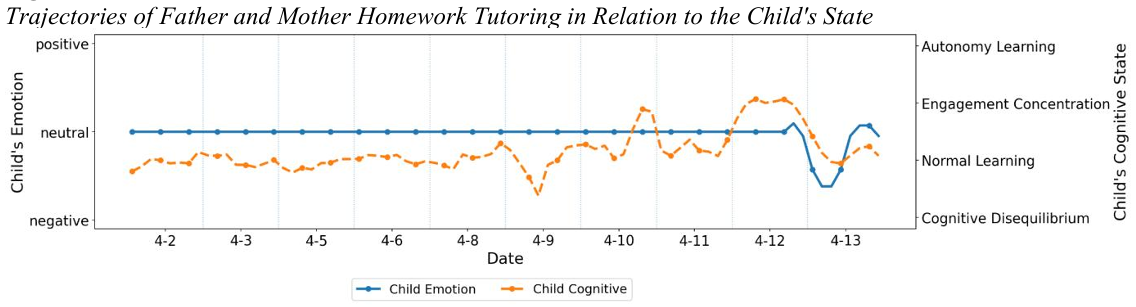
I completed all analytical work for this study, which examines 12.5 hours of naturalistic parent–child homework interactions across 10 days. I conducted over 80% of all behavioral and emotional coding, revised and finalized the codebook, and built the multivariable logistic regression models used to answer RQ1. I also analyzed the temporal trajectories (RQ2), interpreting how parental scaffolding, emotional support, and caregivers’ contrasting tutoring styles shaped the child’s cognitive disequilibrium and affective states. I have completed all the papers, including the Activity Theory mapping and the mechanism explanation. My work revealed strong emotion–cognition coupling patterns and parent-specific effects, providing new insight into the micro-dynamics of homework involvement.
Skills: Qualitative Coding, Codebook Development, Logistic Regression, Time-Series Trajectory Analysis, Vocal Analysis, and Ordered Network Analysis.
Tools: Python, R Code, Google Workspace, and CoLab.
post-thumb

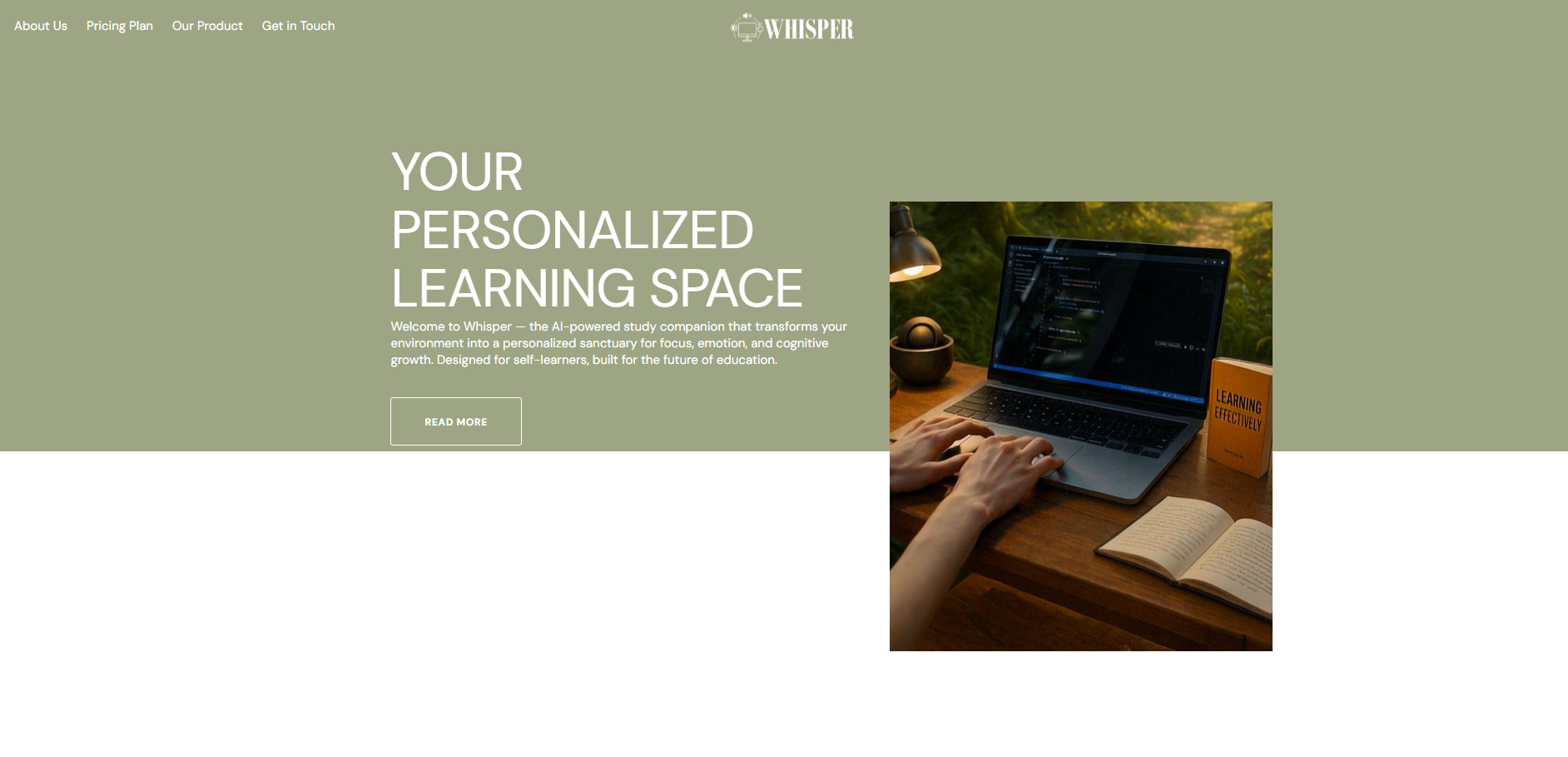
Evaluating the Impact of AI-Powered Audiovisual Personalization on Learner Emotion, Focus, and Learning Outcomes

I originated the core concept for Whisper and led the design and development of its multisensory AI-powered learning environment. I authored the Introduction, created the fully coded frontend, and produced all major prototypes (Canvas wireframes, WIX mockups, and the final integrated interface). I wrote the Rationale for AI Assistance and implemented design refinements, including Draw Mode, silent-mode audio options, and an accessibility-centered layout redesign. I also drafted the Learning Environment section and co-designed the mixed-methods Evaluation framework—writing half of the evaluation procedure, metrics, and data-collection plan. Finally, I authored the Ethical Implications section, articulating privacy, emotional autonomy, and digital equity considerations for AI-driven learning systems.
Skills: Interaction Design, Frontend Development, Learning-Sciences-Driven Design, Mixed-Methods Research Design, Ethical AI, and Prototyping.
Tools: HTML/CSS/JS frontend, WIX, Canva, ChatGPT Image Generation, Gemini, MusicGen, Google Workspace.

post-thumb

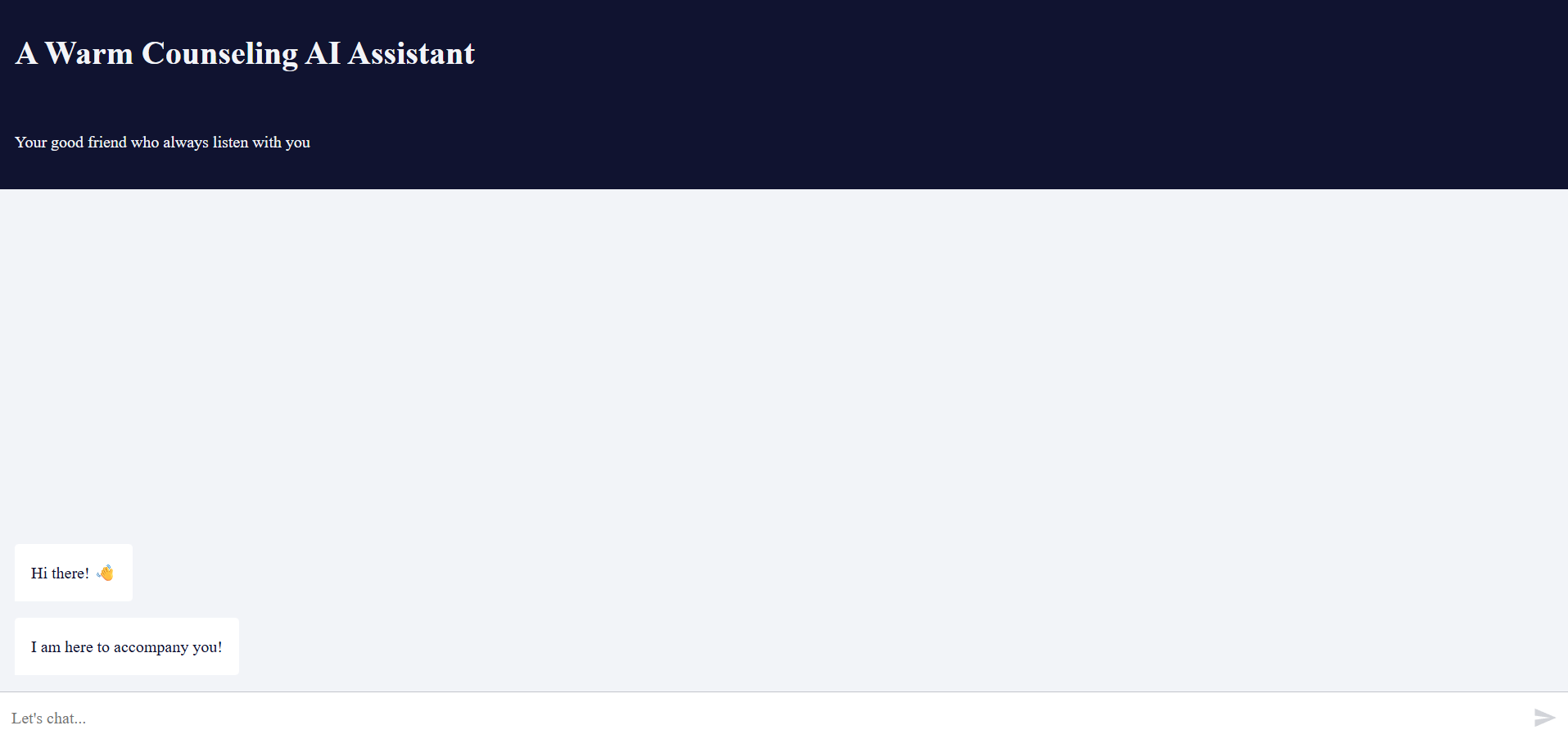
Invisible Mental Health Assessment Chatbot

This project investigates how clinical psychologists conduct mental-health assessments and how their diagnostic logic can be translated into natural-language AI interactions. I conducted and analyzed five in-depth expert interviews, transcribed complete recordings, and led the qualitative thematic analysis. I developed 80% of the code, iterated on the codebook, and synthesized cross-expert diagnostic frameworks, including assessment pipelines, PHQ-9 integration principles, crisis-risk indicators, and natural-language interviewing norms. I also drafted methodological guidelines and produced a multi-agent assessment workflow to support conversational AI design. The outputs directly informed the development of an AI-based, low-intrusion mental health screener. And I also developed an online chatbot prototype based on the findings.
Skills: Qualitative Coding, Thematic Analysis, Semi-structured Interviewing, Mental-Health Assessment Research, Framework Synthesis, Human–AI Interaction, and Machine Learning.
Tools: Lark, Qualitative Coding Sheets, n8n server, Hugging Face, AI Vector, JavaScript.
Lab: Tsinghua University PI Lab.

post-thumb

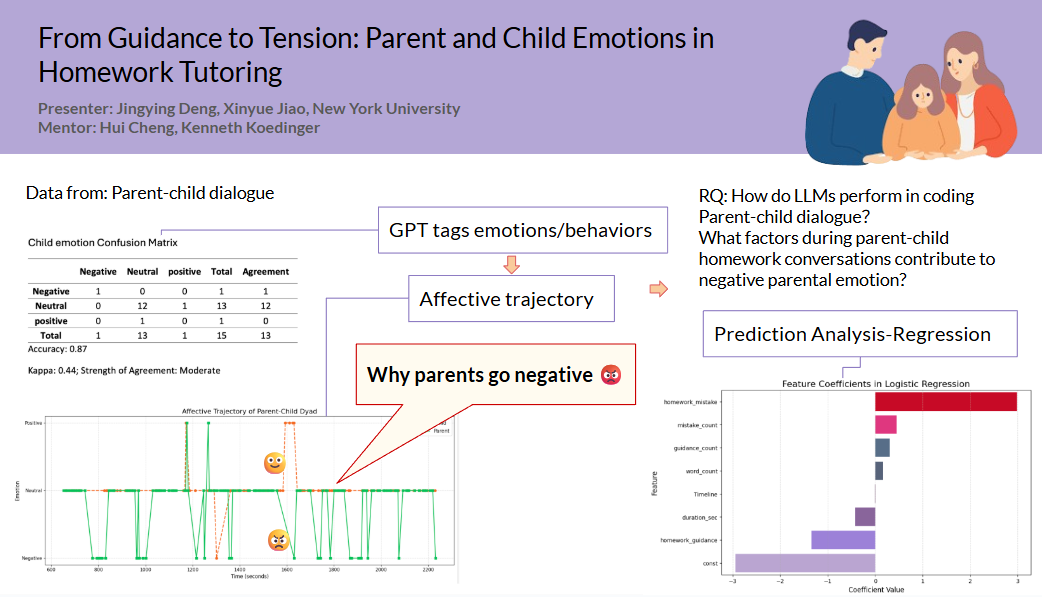
From Guidance to Tension: Parent–Child Emotions in Homework Tutoring

This study analyzes naturalistic parent–child homework tutoring dialogues to understand what triggers negative parental emotions. I manually coded 80% of the dataset and helped refine the emotion and behavior codebook. To evaluate model reliability, I ran the confusion matrix comparing GPT-based auto-labels with human-coded gold standards, revealing large mismatches in emotional nuance (poster, top-right panel). I then built logistic regression models to predict parental negativity from behavioral features; mistakes and repeated errors emerged as the strongest predictors, while increased verbal guidance reduced negativity (poster, center panel). I also co-authored the research poster and independently designed the final poster layout and visualization.
Skills: Qualitative Coding (80%), Codebook Development, Logistic Regression, Confusion Matrix Evaluation, Affective Computing, and Behavioral Analysis.
Tools: LearnSphere, Python, AI Prompt Engineering, Excel, and Canva for Poster Design.
Lab: CMU LearnLab.

post-thumb

Division of Labor and Collaboration Between Parents in Family Education

This study investigates the hidden emotional and cognitive labour parents perform when tutoring young children at home. I conducted in-depth interviews with five parents and analyzed all interview transcripts using reflexive thematic analysis to uncover patterns of emotional exhaustion, invisible domestic labour, parental anxiety, and technology-mediated coping strategies. I also drafted the informed consent form, created recruitment posters, contributed literature synthesis on parental emotional labour and feminist HCI, and authored the Introduction and Findings sections of the final report. My analysis highlighted structural inequalities in homework-related caregiving and identified parents’ nuanced expectations for AI-based emotional intervention tools.
Skills: Qualitative Interviewing, Thematic Analysis, Research Ethics, Literature Review, Feminist HCI, and Parenting Studies.
Tools: Taguette (Qualitative Data Analysis), Mirror, Lark, and LaTeX.
Lab: Tsinghua University PI Lab.

post-thumb

StudyCrafter & StudyHelper: Qualitative Coding of Student-AI Interactions

This project investigates how students demonstrate socially shared regulation and AI literacies while interacting with an AI chatbot designed to support research-methods learning. I contributed to the development and refinement of the codebook, participated in team coding meetings, and coded portions of the dataset. I also identified ambiguous cases in agency/request categories and proposed decision rules to improve reliability through the project email discussions. My contributions strengthened the study's methodological clarity and supported the team's consensus-building process.
Skills: Qualitative Coding, Codebook Construction, Ambiguity Analysis, Socially Shared Regulation Frameworks, and AI Literacy Research.
Lab: NYU Riddle Lab.

post-thumb

Computational Quilting: A Study for Exploring Critical, Creative STEM Thinking

This project explored how computational quilting can serve as a culturally sustaining entry point into computing and creative STEM learning. I contributed to the design of research prompts—centered on identity, freedom, and community futures—and helped verify the experimental protocol before the project lost funding. Drawing on e-textiles research and sociocultural learning frameworks, our team aimed to investigate how narrative-rich, tactile making could support equity-centered computing education.
This project was discontinued, so there is no more information.

post-thumb

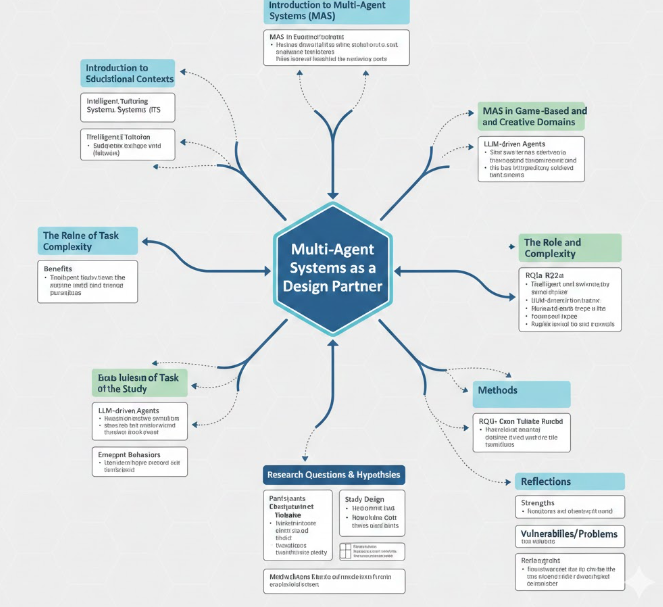
Multi-Agent as a Design Partner: Do More Agents Mean Better Ideas?

I led the concept of this study and authored the full Methods section. We designed a 3×2 mixed-factorial experiment to evaluate how single-agent vs. multi-agent AI systems influence efficiency, creativity, and feasibility across game design tasks of varying complexity. My contributions included formulating the study design, defining variables, developing procedures, creating measurement rubrics, designing counterbalancing, performing power analyses, and aligning hypotheses with cognitive load theory and the multi-agent literature.
Skills: Experimental Design, Research Methods, Measurement Design, and Academic Writing.

post-thumb

Pet Card: A 2D Board Game

Pet Card Game is a lightweight strategy card game designed around probabilistic reasoning, board control, and interactive card effects. Players draw number cards and function cards to compete on a 3×3 grid, combining arithmetic operations, positional play, and bingo-style scoring. I designed the full game rules, core mechanics, scoring model, and card system, and created all visual assets and prototypes, iterated on balance, and refined turn-based logic to support competitive yet accessible gameplay.
Skills: Game System Design, Visual Asset Creation, Playtesting Iteration, and UX for Turn-Based Games.

post-thumb

Pets Deli: Simulation Design for Learning Linear Equations

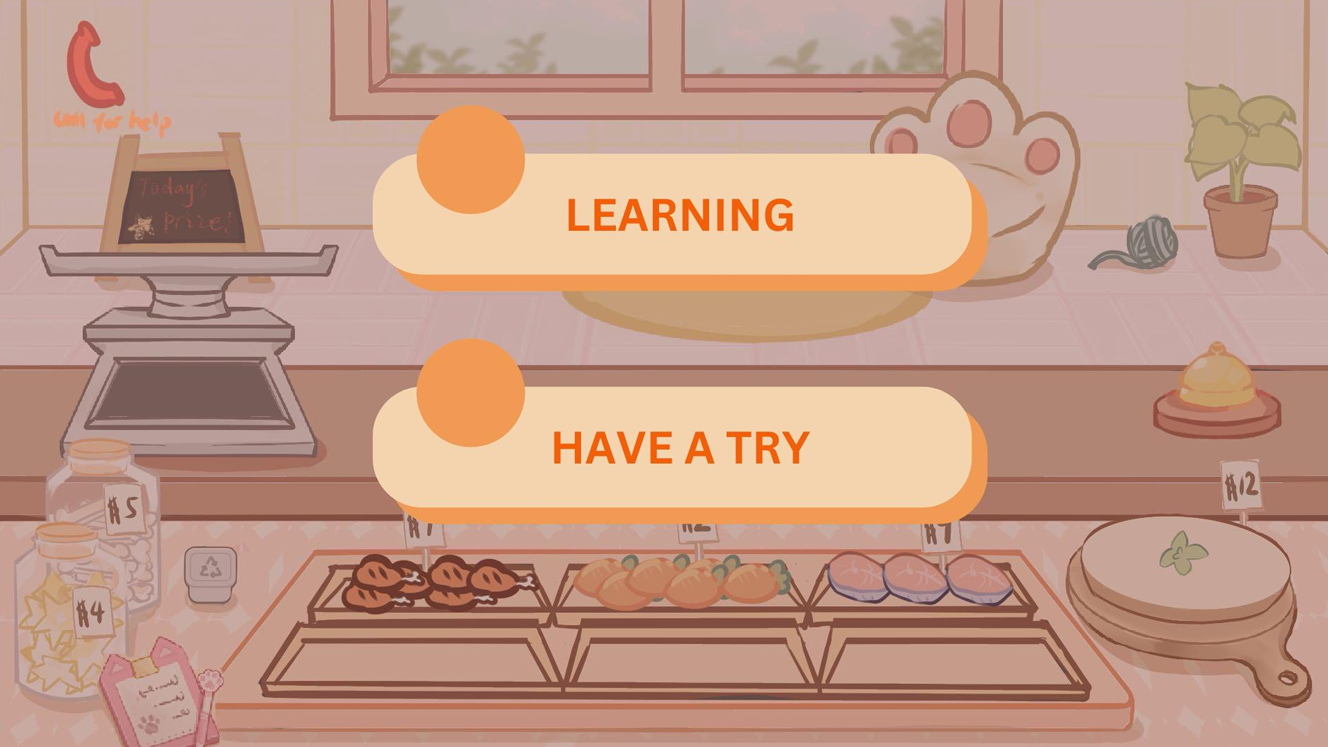
Pets Deli is a learning-focused simulation game that visualizes linear equations through interactive deli tasks. Players explore learning materials via an AI supervisor, manipulate variable-based products with a scale, and apply their knowledge through progressively challenging game tasks. The design incorporates cognitive principles (pre-training, feedback, segmentation, signaling, emotional design, and SDT-based motivation) to support middle school learners struggling with abstract math concepts. I did the whole works.
Skills: Learning Sciences Research, Simulation Design, Cognitive & Multimedia Design Principles, UX Design, Game Mechanics Design, Motivation Design, Educational Theory Application.

post-thumb

Teaching Parents to Talk to Children About Fake News

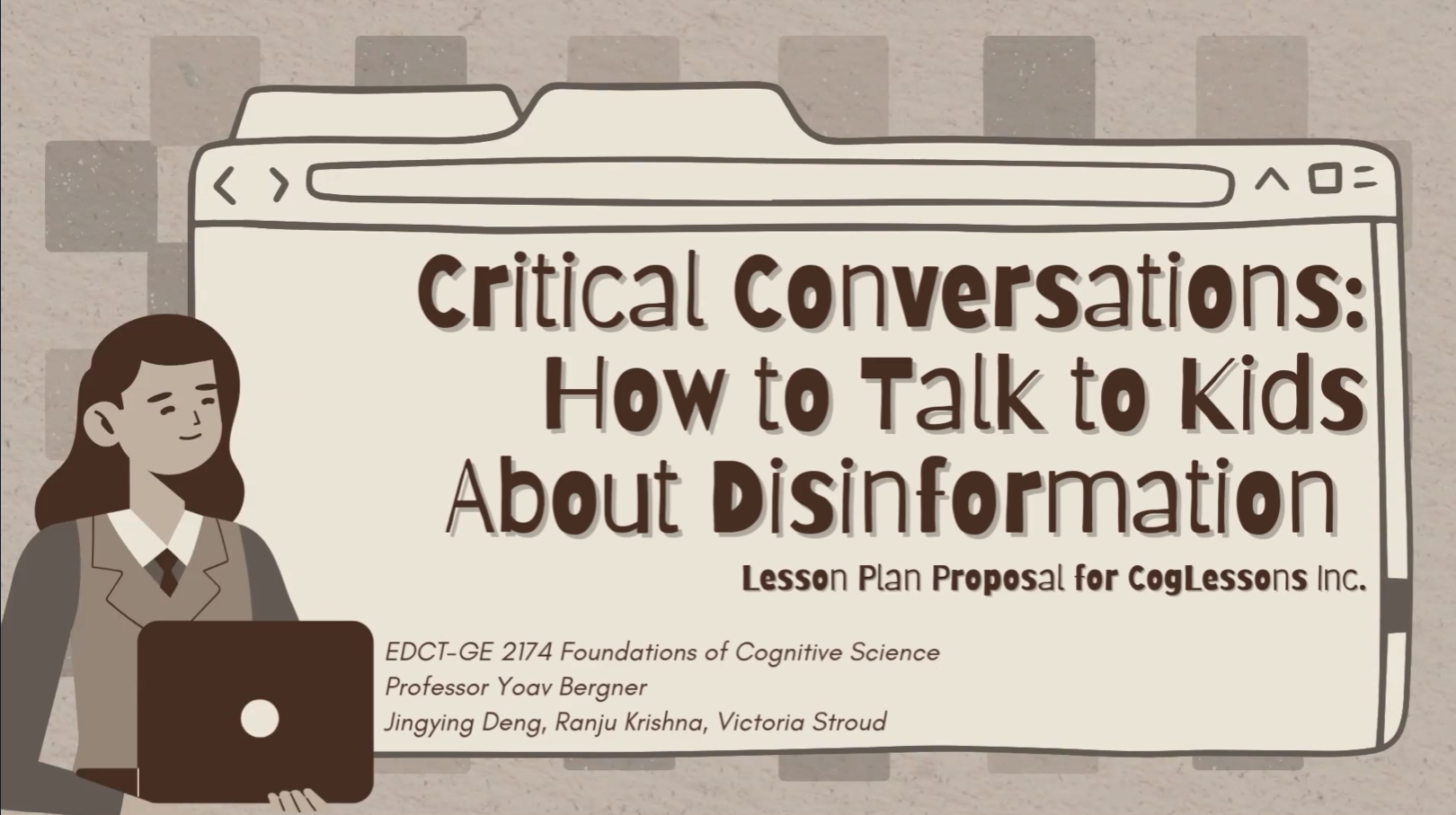
This project applies cognitive science principles to design an instructional module that trains parents to teach children (ages 10–16) how to identify misinformation. Our team developed a theory-driven learning sequence incorporating schema activation, cognitive information processing, cognitive load management, Bloom’s taxonomy, and metacognitive skill development. The curriculum includes pre-assignments, multimedia lessons, guided practice, and real-life transfer activities to strengthen critical thinking and media literacy in families. I contributed to theoretical modeling, lesson structure, and the construction of instructional materials.
Skills: Cognitive Science Application, Instructional Design, Learning Objective Mapping, Multimedia Learning Principles, Qualitative Analysis, Critical Evaluation of Educational Resources, Comparative Analysis, Curriculum Development, Collaborative Design.
Tools: Canva (Multimedia Design) & Google Workspace.

post-thumb

Sea Fearing: A Board Game Desgin

Seafearing is a turn-based strategy puzzle game set on a sinking cargo ship, designed to create tension through rising water levels, environmental hazards, and limited player resources. Our team conducted five rounds of user tests to refine difficulty balance, player flow, and mechanic clarity. I contributed to three major level designs (Levels 3, 6, 7), created the cover art, and co-authored the Game Design Document, including gameplay systems, narrative alignment, and mechanic specifications.
Skills: Level Design, User Testing, Playtesting Protocols, Game Balancing, UX for Games, System Design, Narrative Integration, Visual Design, Technical Writing, Collaboration.

post-thumb

Cross-Cultural Learning in Black Myth: Wukong

I led this project by selecting the research site and conducting extensive analysis of player learning in Black Myth: Wukong across YouTube and Reddit. Using constructivist, social constructivist, and situativity lenses, I examined how players from different cultural backgrounds interpret mythological content, negotiate meaning in communities, and engage in situated cross-cultural learning. My work included observation protocol design, coding of gameplay interactions, cultural interpretation analysis, and theoretical synthesis.
Skills: Literature Review, Theoretical Modeling, Qualitative Coding, Video Analysis, Community Data Analysis, and Insight Synthesis.

post-thumb

Narrative, Digital Media, and Learning Design Project

Integrating learning sciences with multimodal storytelling, these projects explore how visual, audio, interactive, and data-driven narratives enhance cognition and engagement.
Skills: Instructional Design, User Research, Cognitive Theory, Multimedia Development, Data Visualization.

Message sent! Thank you!